

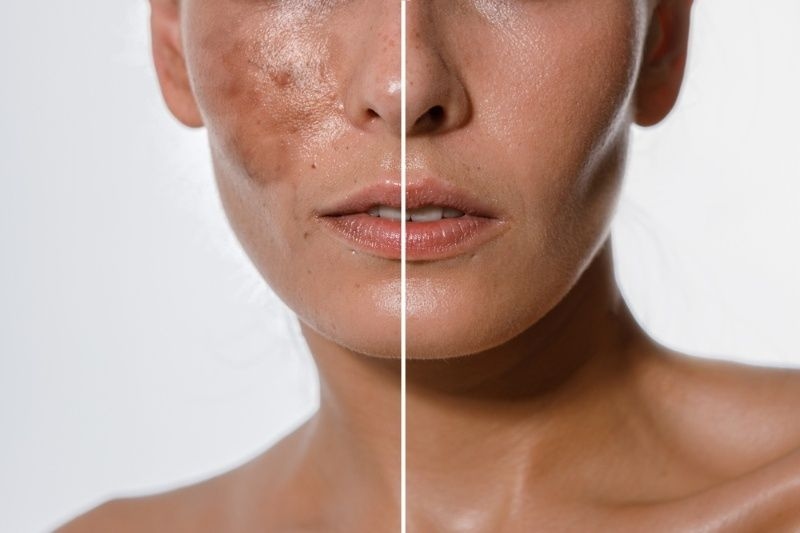
Dealing with uneven skin tone can be a headache, especially if you have deeper skin that’s just more prone to pigmentation issues. Hyperpigmentation shows up a lot on dark skin. It’s normal, but getting rid of it isn’t always quick or easy. With a little patience and the right routine, you really can boost your skin’s appearance and bring back that even, healthy glow.
Let’s see why it actually works for treating hyperpigmentation on darker skin—what causes hyperpigmentation, and what kinds of treatments are available? This blog has it all!
Hyperpigmentation is caused by an overproduction of melanin in some areas of your skin (or body), resulting in darker patches or more blotchy skin tones. If you have dark skin, you already have more melanin, so when stuff like acne, sun, or irritation hits, your skin reacts faster and harder. That’s why skin discoloration treatment stands out—and seems to stick around.
You’ll see it as post-acne marks, sun spots, or hormonal pigmentation. They look a bit different, but it all counts as skin discoloration treatment and needs the right treatment.
Before you launch into any dark spot routine, you have to figure out what’s causing the problem. Most of the time, pigmentation starts after inflammation, like after pimples, scratches, or tiny injuries. Sun exposure is another major culprit, especially if you skip sunscreen. Hormones can stir things up, too (think melasma).
Using harsh products doesn’t help, either. Instead of fixing things, they can make your skin angrier and ramp up discoloration.
Wondering how to get rid of hyperpigmentation? Consistency is your best friend. Changes won’t show up overnight, but sticking with a gentle routine pays off.
Pick a mild cleanser that respects your skin’s barrier. Targeted treatments with ingredients like vitamin C, niacinamide, or azelaic acid can lighten spots over time. They aren’t miracle workers, but they steadily brighten up stubborn areas if you keep at it.
Daily moisturizer goes a long way—it keeps your skin balanced and helps calm the look of dark patches. And don’t forget to pick the right sunscreen. Using it every single day stops spots from getting worse and keeps your progress intact.
If you keep up these habits, you’ll notice real improvements without stressing out your skin.
Finding products that actually work for melanin-rich skin makes a difference. Gentle options usually win out. Mild chemical exfoliants, like lactic acid, lift dead skin and smooth out tone. Retinoids bump up cell turnover and help fade marks gradually—but you have to go slow to dodge irritation.
For deeper or stubborn discoloration, professional treatments (like chemical peels or laser sessions) can help. Just make sure your provider really understands how hyperpigmentation works on dark skin.
Mixing simple home care with expert advice usually gets you the best results for treating dark spots.
You don’t have to get fancy about your routine to see changes. Consistency is what matters most.
Bottom line: Patience and a steady, gentle routine make all the difference for uneven skin tone treatment.
It really comes down to knowing your skin and paying attention to what’s inside the bottle, not just the label. Ingredients are where the magic happens. Vitamin C brightens things up and tackles dullness. Niacinamide is great for fading dark spots while keeping your skin calm. And sunscreen is non-negotiable. If you skip it, you’re pretty much giving dark spots an open invitation.
When trying new products, take it slow—patch test first. You don’t want to risk irritation, which can make hyperpigmentation even worse, especially on darker skin.
The truth is, no matter how amazing a product sounds, results take time. Patience pays off.
You May Also Like to Read: Sensitive Skin Care Using Simple and Gentle Essentials
Sometimes, you might be adding an extra layer of trouble without realizing it. Overdoing exfoliation messes up your skin barrier and leads to more pigmentation. Forgetting sunscreen just lets the sun deepen those spots.
Using harsh bleaching products is risky—they can cause irritation, patchy effects, or even more discoloration. And picking at acne or scabs? That almost always leaves marks and makes the whole process tougher.
Steering clear of these habits will make your treatment plan way more effective.
What you do every day matters. Drink water—a hydrated body keeps your skin happy. Eating meals loaded with antioxidants helps repair from the inside out. Don’t underestimate the power of sleep; it’s when your skin gets its chance to recover.
Stress is another biggie. When you’re stressed, hormones go wild—and your skin pays for it. Little changes in your routine can make your dark spot treatments work better, and they’ll help with long-term improvements, too.
If you’ve been consistent but nothing’s changing, it’s time for professional input. Dermatologists know what to do—they offer solutions made for hyperpigmentation on dark skin.
Go see a specialist if your spots won’t budge, get worse, or start to mess with your confidence. Expert advice can change the game and stop things from getting worse.
Check Out This One: Fresh Glow at Home with Simple DIY Skincare Recipes to Try
There’s no quick fix for hyperpigmentation, especially on dark skin. Stick to a gentle routine, be patient, and remember why you’re doing it—it’s about gradual progress.
If you’re wondering how to actually get rid of hyperpigmentation, don’t chase miracles. Good skincare and healthy habits work together. Pick the right treatments, keep to your routine, and trust the process. Over time, you’ll notice real change.
Absolutely. If you don’t keep triggers in check—things like sun, acne, or irritation—dark spots can creep back. The skin stays sensitive even after you see improvement, so keep up your routine, wear sunscreen, and avoid harsh stuff.
They can be, if you go to someone who knows what they’re doing. Mild peels tend to be best, since stronger ones can do more harm than good—think irritation or even extra pigmentation. The right peel with the right pro is key.
Definitely, eating antioxidant-rich foods and plenty of vitamins and minerals helps your skin heal and improve tone. Drinking water helps, too. It won’t magically erase pigmentation, but it makes your skin respond better to whatever treatments or products you’re using.
You’re better off sticking to a simple routine. Piling on different treatments can really stress your skin, especially if you have a deeper skin tone, since you’re more likely to deal with irritation or dark spots. Take things slow—watch how your skin responds, and avoid mixing too many strong ingredients. Otherwise, you’ll end up with problems you didn’t bargain for.
This content was created by AI